
For generations, Sears was one of the biggest names in American retail. Families shopped there for everything from refrigerators and washing machines to clothing, furniture, and tools. Founded in Minneapolis in 1886 as a watch-selling business, the company eventually grew into a retail empire with hundreds of department stores across the country. As recently as 2002, Sears operated 872 full-line department stores across the United States. What followed was one of the most dramatic declines in American retail history, leaving behind a handful of remarkable survivors.
The troubles began long before online shopping became popular. Growing competition, changing consumer habits, and years of financial difficulties gradually weakened the chain. A merger with Kmart in 2005 failed to reverse its fortunes, and Sears filed for bankruptcy in 2018. Hundreds of stores disappeared as the company continued shrinking, leaving just five department stores scattered across four states in 2026. Remarkably, these survivors are still operating decades after opening their doors, offering a fascinating glimpse into the history of a fading American retail giant.
Miami, Florida
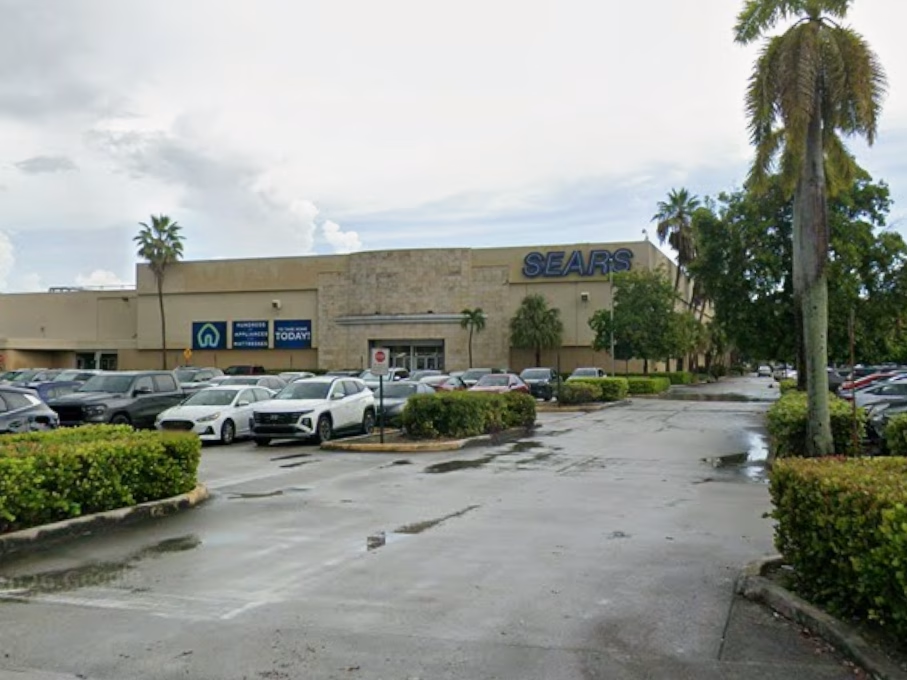
The oldest surviving Sears department store opened in Miami in 1954, long before enclosed shopping malls became a dominant part of American retail. Unlike the other four remaining locations, this store occupies a freestanding building surrounded by parking lots. Historical aerial photographs from 1940 show a largely undeveloped property, although residential development was already taking shape nearby.
By 1961, the Sears building was firmly established, and the surrounding neighborhood had grown considerably. The store has remained a familiar landmark along Coral Way for more than seven decades, but its future is uncertain. A redevelopment plan approved in 2025 calls for replacing the property with residential buildings and commercial space. For now, the recognizable Sears sign continues to overlook a parking lot that has served generations of Miami shoppers.
Concord, California
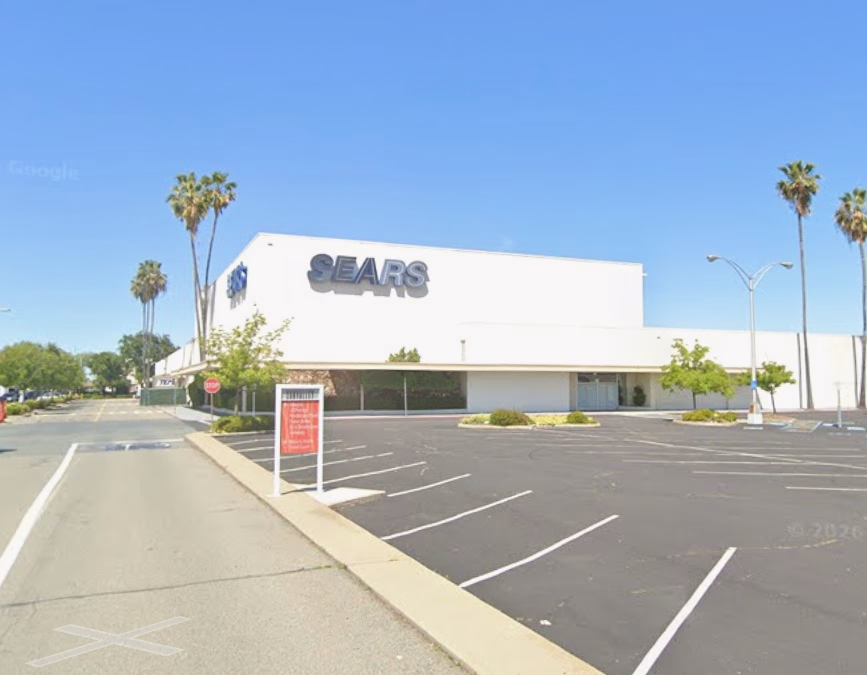
California’s last remaining Sears opened in 1966, nearly a year before the surrounding Sunvalley Shopping Center officially welcomed shoppers in 1967. The mall was originally promoted as the world’s largest air-conditioned regional shopping center, with Sears joining Macy’s and JCPenney as its major anchors. The property had undergone an extraordinary transformation in the preceding two decades. Aerial photographs from 1946 show agricultural fields and orchards covering the area, while images from 1959 reveal expanding suburban neighborhoods surrounding the future shopping center.
By 1968, the enormous mall and its parking lots had replaced much of the former farmland. Sears still occupies its distinctive position extending from the southern end of the mall, where the building looks almost like a freestanding department store from certain angles. Nearly 60 years after opening, it remains the last Sears department store operating in California.
Braintree, Massachusetts
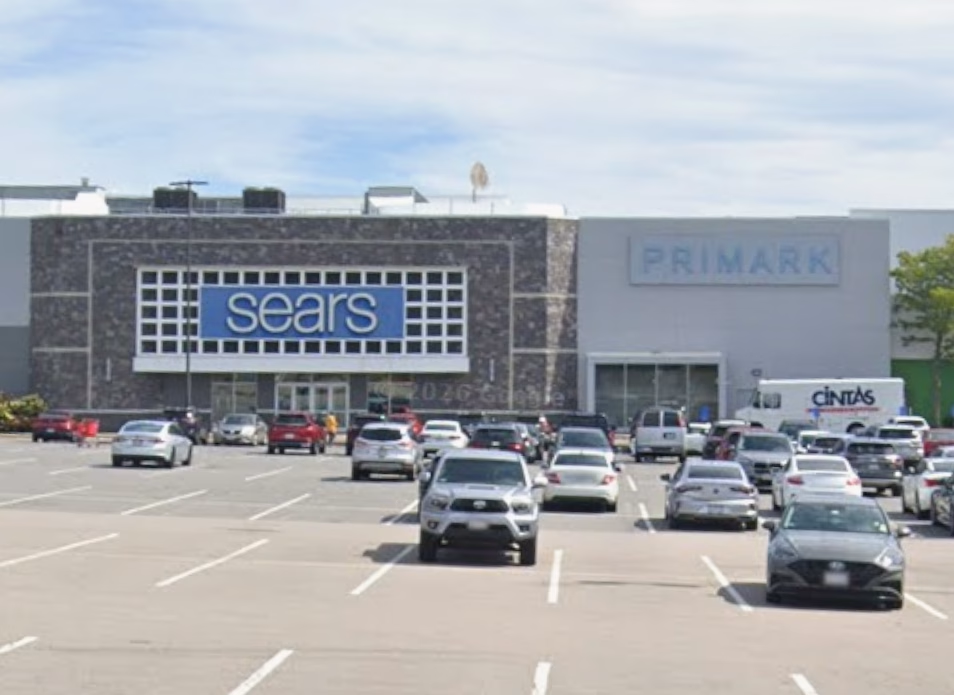
New England’s last surviving Sears is located at South Shore Plaza, a shopping center that originally opened in 1961. Sears wasn’t among the mall’s original tenants, arriving in 1980 after nearly two decades of commercial development at the property. Historical aerial photographs from 1957 show mostly undeveloped land, with scattered roads and disturbed terrain where the shopping center would eventually stand.
By 1969, the original mall and its extensive parking areas had transformed the landscape, although the northern portion remained available for future expansion. Sears was firmly established by 1985 and would remain a major anchor for decades. Its retail space eventually became smaller as shopping habits changed. In 2017, clothing retailer Primark opened in part of the former Sears space, creating an unusual arrangement in which the two retailers now occupy portions of the same building.
El Paso, Texas
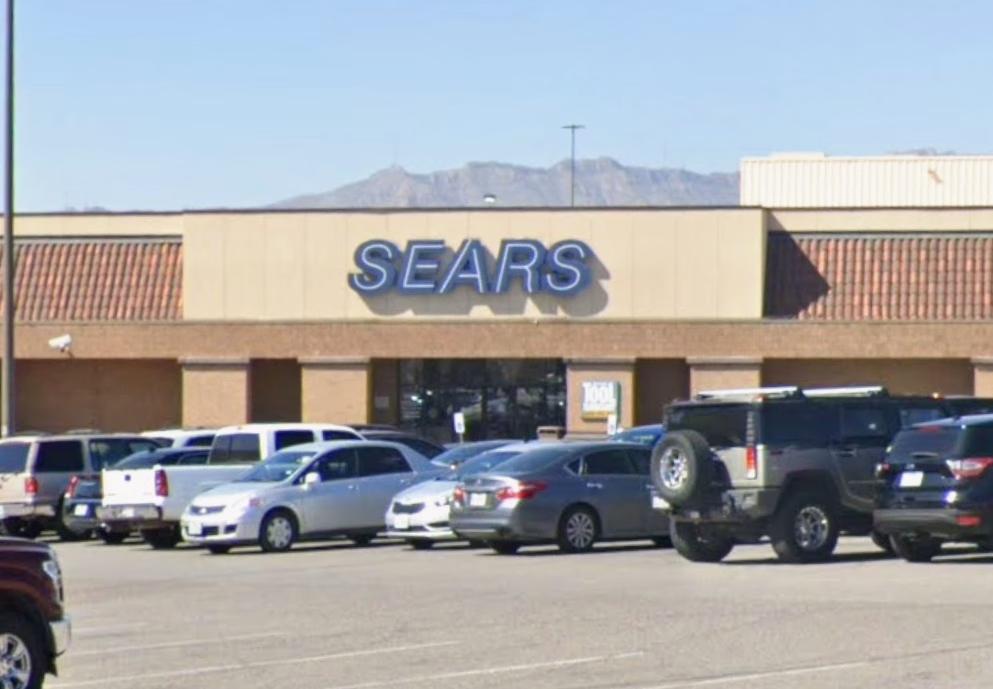
The last Sears department store in Texas stands at Cielo Vista Mall in El Paso, where it opened in 1982. Its surroundings offer another remarkable example of the rapid suburban development that helped Sears grow across the country. In 1955, aerial photographs show the future shopping center property as largely undeveloped desert, with little evidence of the extensive commercial district that would eventually surround it.
Roads, residential neighborhoods, and businesses gradually appeared during the following decades, and by 1984, Cielo Vista Mall was firmly established with expansive parking lots and several major department stores. Sears has since surrendered portions of its original retail space, including an area that became a Primark store in 2025. Despite those changes, the familiar Sears name continues to represent the chain in a state where its stores were once found throughout major metropolitan areas.
Orlando, Florida.
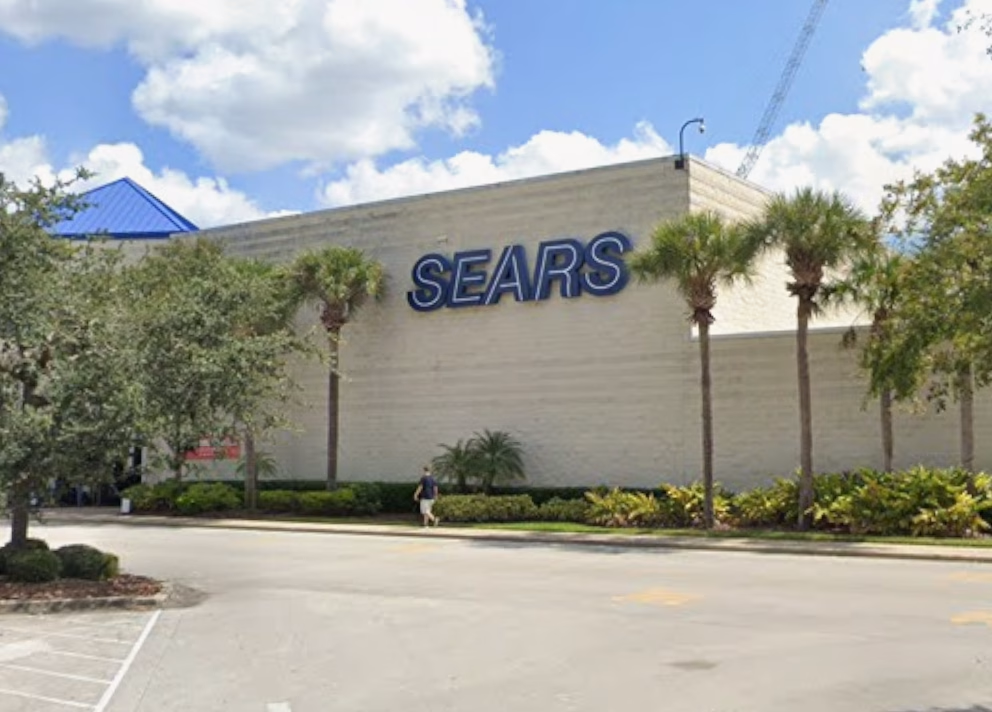
Orlando’s surviving Sears is located at The Florida Mall, one of the city’s major shopping destinations since opening in 1986. The store was among the original anchors of the enormous suburban shopping complex, which rose from land that had remained largely undeveloped just a few decades earlier. Historical aerial photographs from 1952 show open ground and scattered vegetation across the future mall site. By 1984, extensive clearing and grading had begun, followed by visible construction of the mall buildings in 1985.
A decade later, the completed shopping center was surrounded by sprawling parking lots and growing commercial development. The Florida Mall has continued evolving through expansions and changing tenants, while Sears has gradually reduced its presence within the property. Portions of its former space have been repurposed, leaving a much smaller operation than the department store that originally welcomed shoppers four decades ago.
Last Updated on October 26, 2026 by F.E.M